
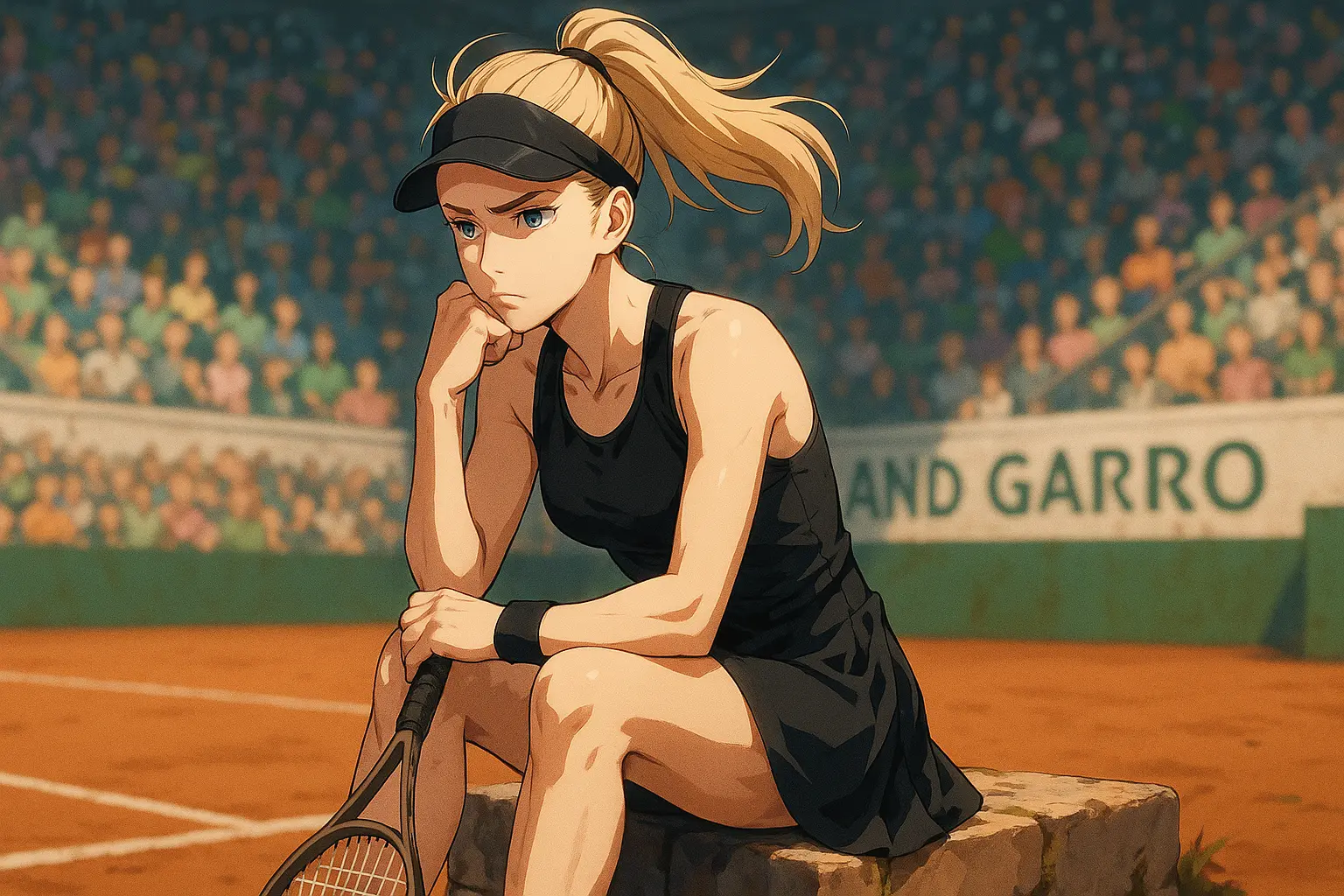
Svitolina didn’t spend 2025 chasing her old peak like a nostalgia act. She played it like an accountant with a grudge — every rally audited, every loose service game filed as unacceptable, every opponent forced to keep proving they could hit the same shot twice.
What made the season bite wasn’t just volume. It was the return of something that had always been her superpower: she didn’t merely survive pressure, she made it feel contagious.
She went 33–14 on tour (36–15 including Billie Jean King Cup), with her best tennis arriving on clay and her worst arriving when the year demanded a clean hard-court finish.
Melbourne: A Slam Run Built on Second Acts
The Australian Open set the tone. Svitolina looked sharp early, then pulled off the sort of win that tells you the engine is humming: a comeback demolition of Jasmine Paolini, 2-6, 6-4, 6-0, with a DR of 1.24 and first-serve points won over 83%.
She backed it up by brushing aside Kudermetova, then pushed Madison Keys in the quarterfinals. That 3-6, 6-3, 6-4 loss wasn’t a collapse — it was one of those matches where you realise Svitolina is back in the rooms that matter.
The Early Hard-Court Grind: Wins, Wobbles, and Tight Margins
After Melbourne, the hard-court swing became patchier. She was upset by Anna Blinkova in Linz (DR 0.88). In Doha, she escaped Vondrousova after getting bagelled in the first set, then lost to Pegula after a second set breaker. Dubai gave her a clean win over Anna Kalinskaya, then a brutal two-tiebreak loss to Clara Tauson.
This was the theme of her hard-court season in miniature: 14–9 on tour, often competitive, sometimes clinical, but not always able to land the finishing punch when the match turned into a coin toss.
Indian Wells and Miami: Proof She Could Still Bite the Top 10
Indian Wells was one of her most convincing two-week stretches on hard courts. She beat Danielle Collins, then got her payback against Jessica Pegula in three sets, 5-7, 6-1, 6-2, DR 1.21.
The quarterfinal against Mirra Andreeva, though, was a warning flare: DR 0.54 in a straight-sets 7-5 6-3 loss. It was one of the few matches all year where she didn’t get dragged into deep water — she just never found the rope.
Miami followed a similar script. Two strong wins (including Belinda Bencic and Karolina Muchova), then Swiatek in the fourth round. Svitolina made it uncomfortable, lost the tiebreak, then ran out of runway. 7-6(5) 6-3.
Clay Season: Her Best Tennis, Her Most Reliable Identity
On clay, she was a machine with manners.
She won Rouen, stringing together five straight wins, peaking with a 6-0, 6-2 semifinal (DR 2.18) against Elena Gabriela Ruse, then handling Olga Danilovic in the final in two sets. It wasn’t flashy tennis. It was organised cruelty.
Madrid was even louder. She beat Rybakina, Sakkari, and Uchijima to reach the semifinals, with two statement DRs (1.85 and 1.87) that showed how well she was controlling the scoreline. Aryna Sabalenka stopped her, but even that loss looked like a proper big-match exchange (6-3 7-5) rather than a derailment.
Rome added three more wins before Peyton Stearns edged her in a third-set tiebreak. Then Paris gave her the season’s clearest “Svitolina formula” run: gritty wins, two tiebreak escapes, and another takedown of Jasmine Paolini in the round of 16. Swiatek ended it in the quarters, 6-1, 7-5 — and the second set mattered, because it showed Svitolina didn’t fold once the door started closing.
She finished 16–3 on clay. That’s not a good clay season. That’s a blueprint.
Grass: Quick Work, Then One Bad Hour
Grass was shorter and sharper. She beat Mertens in Bad Homburg 7-5 6-4, then lost a tight three-setter to Haddad Maia in which she came within a point of flipping the match.
Wimbledon started like a dream — DR 2.00 in round one — and ended abruptly against Mertens in round three, 6-1, 7-6(4). It was her one truly flat Slam performance of the year: the kind where the body is there, but the timing isn’t.
North America: The Late-Season Puzzle She Never Quite Solved
Montreal looked like a revival. She beat Kalinskaya 6-1, 6-1 with a DR of 2.03 and won over 91% of first-serve points. She then handled Anisimova 6-4 6-1 to reach the quarters.
And then Naomi Osaka flattened her, 6-2, 6-2, DR 0.58 — a reminder that when the opponent takes time away, Svitolina’s counterpunching needs a little more first-strike bite.
Cincinnati was another three-set loss (to Krejcikova). Then the US Open was the season’s hard-court bruise: out in round one to Bondar, DR 0.79, with double faults spiking and the match never really moving onto her terms.
The BJK Cup, at least, restored the final note: a win over Badosa and a tight loss to Paolini. Competitive to the end, even when imperfect.
Elina Svitolina Assessment
This was a top-tier Svitolina season because it had a clear identity and repeatable patterns — especially on clay. When she won, she didn’t just edge matches; she controlled them. Her average DR in wins was 1.37, compared to 0.85 in losses. Translation: when her level was there, the match usually wasn’t close.
The hard-court story was more complicated. She still produced big wins (Pegula at Indian Wells, Paolini in Melbourne), but the second half of the year exposed the same vulnerability that has chased her at times: if the serve doesn’t give her enough cheap points, she can be forced into too many “perfect tennis” service holds.
But the bigger takeaway is blunt: she didn’t have a late-career season. She had a proper one — title, multiple big-event semifinals/quarters, and a clay campaign that looked like a player who trusts her body, her legs, and her game plan again.
Final Verdict: A-
Svitolina’s 2025 was a serious contender’s year dressed in disciplined clothing. The clay swing alone was elite, and the wins over top names weren’t accidental — they were earned through structure.
GPA 3.5
The grade drops slightly because the hard-court finish was messy, and the US Open exit was the wrong kind of memorable. But as a season-long body of work, this was Svitolina reminding the tour that her best tennis doesn’t age — it tightens.
She started the season as world No.27 and finished it at No.14.
That context nudges the grade up to a straight A — because climbing back inside the top 30 while balancing motherhood is a competitive feat this sport should value more, not less.
Related WTA Articles You Might Enjoy
Madison Keys Triumphs Over Elina Svitolina to Reach 2025 Australian Open Semifinals
Elina Svitolina Ends 2025 Season: On Balance, the Heights Outweighed the Lows
Elina Svitolina’s Streak Against Russian Players Ends with Loss to Anna Blinkova in Linz