For most players, beating Iga Swiatek and Aryna Sabalenka in the same season would be enough to frame the whole year in gold. For Jelena Ostapenko, 2025 proved that even that kind of résumé can be buried under a landslide of early exits, retirements and scorelines that make you rub your eyes. Her tennis was loud, violent and often brilliant; her results were a tug-of-war between those peaks and all the days when the radar simply went.
She began the year ranked just inside the Top 15 and ended it drifting in the mid-20s, a former Roland Garros champion who could still turn the tour’s apex predators into sparring partners one week and lose to a qualifier the next. If you wanted stability, you were in the wrong fan base.
Australian Summer: Flat Start, No Slam Launchpad
Adelaide offered a little taste of the good and the bad. She turned a messy first round into a strong win over Magdalena Frech, dropping the opening set then rolling 6-1, 6-1 with a chunky dominance ratio around 1.3. The reward was Madison Keys, who soaked up the pace and beat her 3-6, 6-4, 6-3, the DR dipping below 0.9 as the rallies stretched out.
At the Australian Open, it got worse. As the No.16 seed she ran into Belinda Bencic in the first round and left 6-3, 7-6(6), her DR just 0.84. The performance was competitive but not convincing; for a player who has always fancied big courts and bright lights, a one-and-done in Melbourne was a misfire that set the tone for a streaky early season.
Doha: A Vintage Ostapenko Week With a 1000-Level Roar
Then she flew to Doha and became the most dangerous WTA player on the planet for five days.
She opened with a routine 6-2, 6-1 over Aoi Ito, DR 1.93, then took out Liudmila Samsonova 7-6(5), 7-5 in a tight, heavy-hitting match where her big returns did the margin work. Jasmine Paolini, Ons Jabeur and finally world No.2 Iga Swiatek all went down in straight sets, the DRs climbing from 1.46 to a frankly violent 1.69 against Swiatek.
It was Ostapenko at her most distilled: second serves butchered, forehands lasered into corners, matches shortened by shot-making more than strategy. Amanda Anisimova stopped her 6-4, 6-3 in the final, a day where the error count outpaced the winners just enough. But Doha proved, again, that when she is on, she doesn’t just belong with the elite — she can blow them away.
Dubai, Indian Wells, Miami: The Hangover
The immediate follow-up was familiar: a crash.
In Dubai she lost her opener to qualifier Moyuka Uchijima 6-3, 6-3 with a DR of 0.75, never getting a proper foothold. Indian Wells brought another early exit, this time to Wang Xinyu in straight sets despite essentially even numbers; Miami produced a two-tight-set loss to wildcard Alexandra Eala.
Across those three events, there was no technical catastrophe in the stats — DRs hovering around or just under parity — but the spark that lit up Doha was gone. The top-10 scalp run gave way to the sort of pedestrian losses that have stopped her ranking ever quite matching her weapons.
Clay: Stuttgart Crown, Paris Ceiling
Charleston on green clay was a gentle warm-up, a win over Louisa Chirico followed by a straight-sets defeat to Danielle Collins. Stuttgart, though, was where her clay season burst into colour.
She beat Dayana Yastremska (with a retirement assist), then outslugged Emma Navarro in three. In the quarterfinal she took out Swiatek again, 6-3, 3-6, 6-2, the DR over 1.1 in a match full of risk and very little regret. A straight-sets win over Alexandrova followed, then a 6-4, 6-1 dismantling of world No.1 Sabalenka in the final with a dominance ratio of 1.37.
That Stuttgart title — a 500, on clay, with wins over Swiatek and Sabalenka back-to-back — is the single best trophy run of her post-Roland Garros career. It put her back into the Top 20 and briefly made her look like the most dangerous floater in Paris.
Madrid and Rome cooled things. A loss to compatriot Sevastova in Madrid, then a scratchy comeback over Sramkova and a walkover in Rome before Paolini stopped her in the last sixteen.
At Roland Garros, she needed three sets to straighten out Polina Kudermetova and Caroline Dolehide, then ran head-first into Elena Rybakina and lost 6-2, 6-2 with a DR of 0.64. For a player who once owned Paris, a third-round ceiling felt like a reminder that the tour has moved on even if her power hasn’t.
Grass: False Starts and Sore Exits
Eastbourne began well enough: she beat Sonay Kartal 6-3, 7-6(2), then retired against Alexandra Eala at 0-6, 6-2, 3-2. The DR suggests she was turning the match around when the body said otherwise.
Wimbledon brought another collision with Kartal, this time a 7-5, 2-6, 6-2 loss in round one. For someone with a grass game big enough to bully many seeds, going 1–2 across the entire swing, with two British wildcards dictating the narrative, was a jarring entry on the season sheet.
North American Hard: Quiet Results, No Major Run
The summer hard courts never quite ignited. In Montreal she edged Renata Zarazua in three, then lost meekly to Naomi Osaka 6-2, 6-4 with a weak DR of 0.73, mostly reacting rather than directing.
Cincinnati was a walkover win followed by a three-set loss to Lucia Bronzetti after taking the first set 6-1 — DR still positive, but the familiar pattern of control slipping through her fingers.
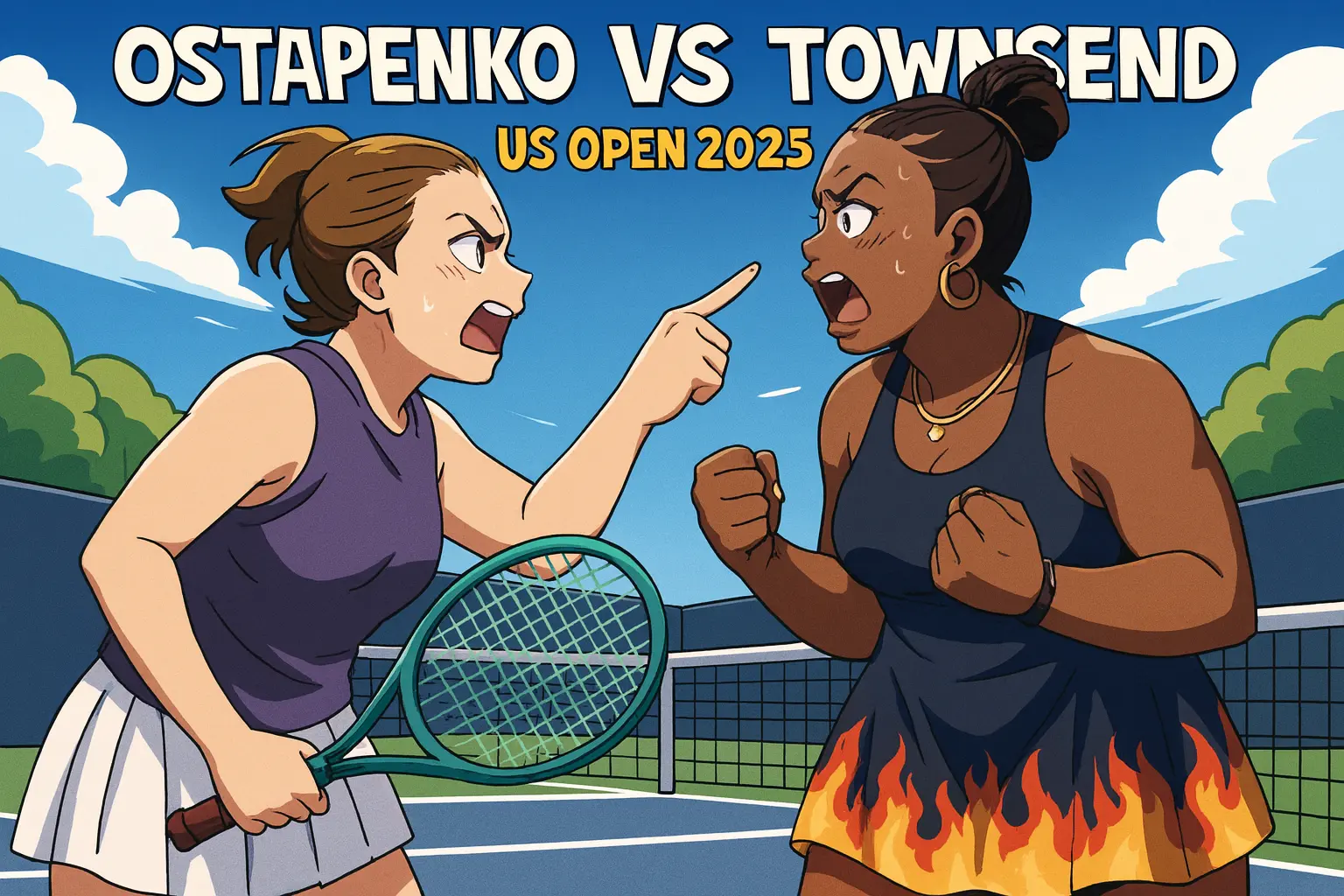
At the US Open she beat Wang Xiyu comfortably in the first round, then was outplayed by Taylor Townsend 7-5, 6-1 in the second, the DR plunging to 0.51. For a player capable of flattening top seeds, her Slam record in 2025 (R1, R3, R1, R2) was simply not good enough.
Autumn: Warning Lights Everywhere
Guadalajara brought one of the more worrying defeats of the year: a three-set loss to qualifier Marina Stakusic despite fighting to a second-set tiebreak. Beijing was another early exit, beaten 6-3, 6-2 by Priscilla Hon.
Wuhan was the grim coda. Sorana Cirstea led 6-0, 2-1 when Ostapenko retired, the DR a brutal 0.47. Taken with the earlier retirements in Stuttgart (Yastremska), Eastbourne and the increasingly patchy schedule, the season’s end screamed physical strain as loudly as it did tactical chaos.
Jelena Ostapenko Assessment
Ostapenko’s 2025 was extreme even by her own standards. On the plus side, she:
- Won Stuttgart, a prestigious 500, beating Navarro, Swiatek and Sabalenka in one week.
- Reached the Doha final, taking out Swiatek, Jabeur, Paolini and Samsonova along the way.
- Logged multiple wins over top-10 players and spent much of the year inside or near the Top 20.
Her dominance ratios in those big wins weren’t flukes; they routinely sat in the 1.3–1.7 range, the statistical footprint of genuine top-tier tennis. At her best, she hit like a top-five player and intimidated like one too.
But the other column is heavy:
- First-round exits at three majors (AO, Wimbledon, USO) and only a third round in Paris.
- Early losses to qualifiers and lower-ranked players (Uchijima, Eala, Hon, Stakusic).
- Multiple retirements (Eastbourne, Wuhan) and a run of limp defeats after big weeks, suggesting both physical and emotional let-downs.
The DRs in a worrying number of those losses — often under 0.8, sometimes nearer 0.5 — show days when she was simply not competitive. For a player of her weapons, that’s less about talent and more about how often she can summon full focus, full fitness and something resembling a Plan B.
So 2025 ends up feeling like a highlight reel stitched onto a warning document. The wins over Swiatek and Sabalenka are proof that the most frightening version of Ostapenko is still alive and dangerous. The Slam results, retirements and lack of consistent deep runs everywhere else show why her ranking drifted towards the mid-20s instead of climbing.
Final Verdict: B- (GPA: 2.8)
Measured purely by peaks, this could have been an A- year: a 500 title, a 1000 final, and multiple scalps of world No.1s. Measured by week-in, week-out performance, Slam output and availability, it dips sharply.
Not a resurgence, not a collapse — a wild, uneven season where she reminded the very best that she can still knock them over, while also reminding everyone why she isn’t sitting alongside them in the rankings.
GPA: 2.8
If 2026 is going to be something different, it will need fewer retirements, fewer anonymous first weeks at the majors, and a little more of that Stuttgart discipline stitched around the chaos that makes Jelena Ostapenko who she is.
Related WTA Articles You Might Enjoy
2025 Stuttgart Open WTA Results (Final Update) – Jelena Ostapenko Wins Title and Takes Home Porsche