
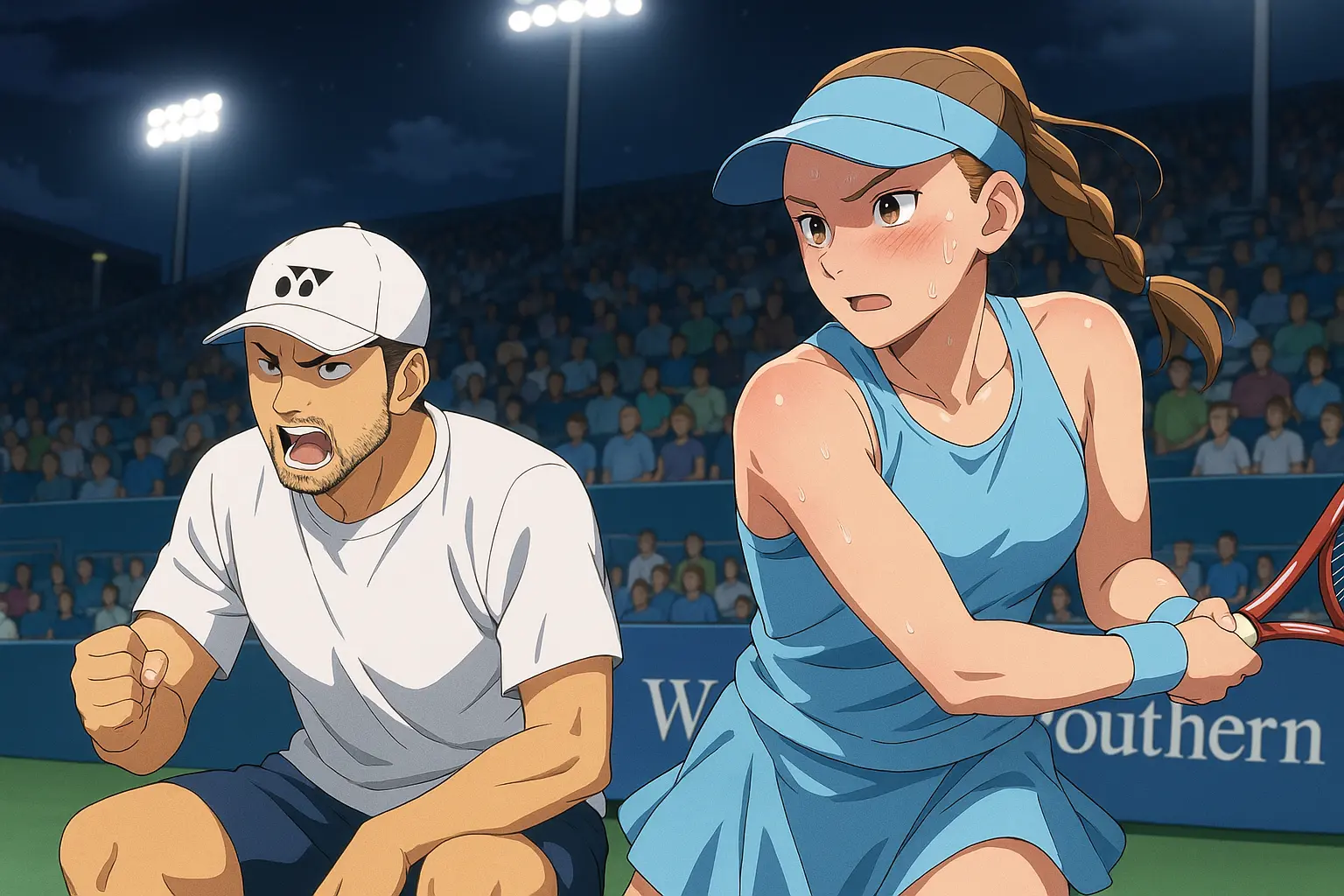
Elena Rybakina didn’t just win the WTA Finals in Riyadh. She walked straight through one of the loudest controversies of the season and left it echoing behind her.
All Ways Lead to… Stefano Vukov
For months, the conversation around the former Wimbledon champion had little to do with forehands or first-serve percentages. It revolved around her coaching box — who was in it, who wasn’t, and whether Stefano Vukov should have been allowed back at all. By the end of the year, Rybakina let the tennis do the cross-examination.
She finished the 2025 season holding the most prestigious trophy of her career since Wimbledon, riding an 11-match winning streak, and climbing back to world No. 5. Titles in Ningbo and Riyadh transformed a year that once flirted with freefall into one of the most compelling redemption arcs on the WTA Tour.
From July onward, the numbers told a different story to the noise. After Wimbledon, Rybakina went 27–6 on hard courts — more wins than any other player in the second half of the season. At a time when she looked vulnerable, even adrift, she instead found clarity.
That clarity, inevitably, led back to Stefano Vukov.
The Coach Nobody Stopped Talking About
Rybakina’s coaching carousel — from Goran Ivanisevic to Davide Sanguinetti and finally back to Vukov — played out under constant scrutiny. Vukov’s late-season reintegration was met with visible scepticism across the tennis world, shaped by previous investigations and sanctions that had kept him away from the tour for much of 2025.
The optics were uncomfortable. The reaction was fierce. And the timing, just weeks before the WTA Finals, felt combustible.
Yet in Riyadh, Rybakina produced her cleanest, calmest tennis of the year.
Elena Vesnina, the former world No. 1 in doubles and an Olympic champion, believes the criticism missed a fundamental truth about the player herself.
“I always believed in Elena,” Vesnina told Championat.
“I like how she plays, what kind of person she is, what kind of tennis player she is. Many doubted the reunion with her coach, but I have seen Stefano Vukov work. He knows her very well and knows what to tell her.”
Why Vukov Works — Even When It Looks Wrong
From the outside, Vukov’s intensity has often been framed as excessive, even destabilising. Vesnina sees it differently. In her view, Rybakina’s famously restrained temperament requires exactly that kind of counterweight.
“Lena can seem phlegmatic, withdrawn, lost in thought,” Vesnina explained. “She needs someone who can wake her up. Vukov knows how to bring her back into the right state: ‘You’re on court. You’re ahead. Come on. You’re a machine. You work hard.’”
It’s an assessment that cuts against the popular narrative — and one Riyadh made difficult to dismiss. Rybakina played with tactical discipline, emotional control and relentless aggression, none more so than in the final against Aryna Sabalenka.
The Match That Ended the Debate — For Now
Even Vesnina admitted surprise at the level Rybakina reached when it mattered most.
“I hoped for it, but I didn’t expect her to play so cleanly in the final,” she said. “The level she showed honestly shocked me. Watching the final against Sabalenka, I felt Aryna would struggle. She doesn’t like playing against someone who hits just as hard and takes away her weapons.”
Rybakina did exactly that. She didn’t blink. She didn’t drift. She dictated.
Perhaps the most striking element of her Riyadh run wasn’t the power or the precision, but the absence of visible tension. Despite the speculation, despite the pressure of the richest event in WTA history, she played as though the storm existed somewhere else.
“It was incredible how calmly she played this tournament,” Vesnina said. “As if it were some small club event. But she has won Wimbledon. That’s her temperament.”
What Comes Next
With her ranking restored and her team — controversially — stabilised, Rybakina heads into 2026 with momentum and unresolved questions. She opens her season at the Brisbane International on January 5, the only warm-up she will play before the Australian Open.
In Melbourne, she defends fourth-round points after losing this year to eventual champion Madison Keys. The draw will matter. The scrutiny will remain.
But after Riyadh, one thing is clear. Elena Rybakina has reminded the tour that silence, when backed by results, can be the loudest response of all.
Related WTA Articles You Might Enjoy
Elena Rybakina Overcomes Off-Court Turmoil to Advance in Qatar Open Amid Stefano Vukov’s Suspension
Stefano Vukov Cleared to Return After WTA Ban Lifted
Vukov’s Return Fires Up Rybakina in Midnight Cincinnati Comeback over Mertens