Andrea Petkovic didn’t bother easing the room in. She walked onto the stage at the Mercedes-Benz Museum in Stuttgart, glanced at the assembled executives, legends and cameras, and immediately punctured the formality with her trademark dry humor. A half-mangled introduction of Roger Federer followed. Laughter did the rest.
It turned out to be the perfect tone-setter. Because while this was a corporate announcement on paper, what unfolded felt more like a statement of intent — one that may quietly reshape the commercial ceiling of women’s tennis.
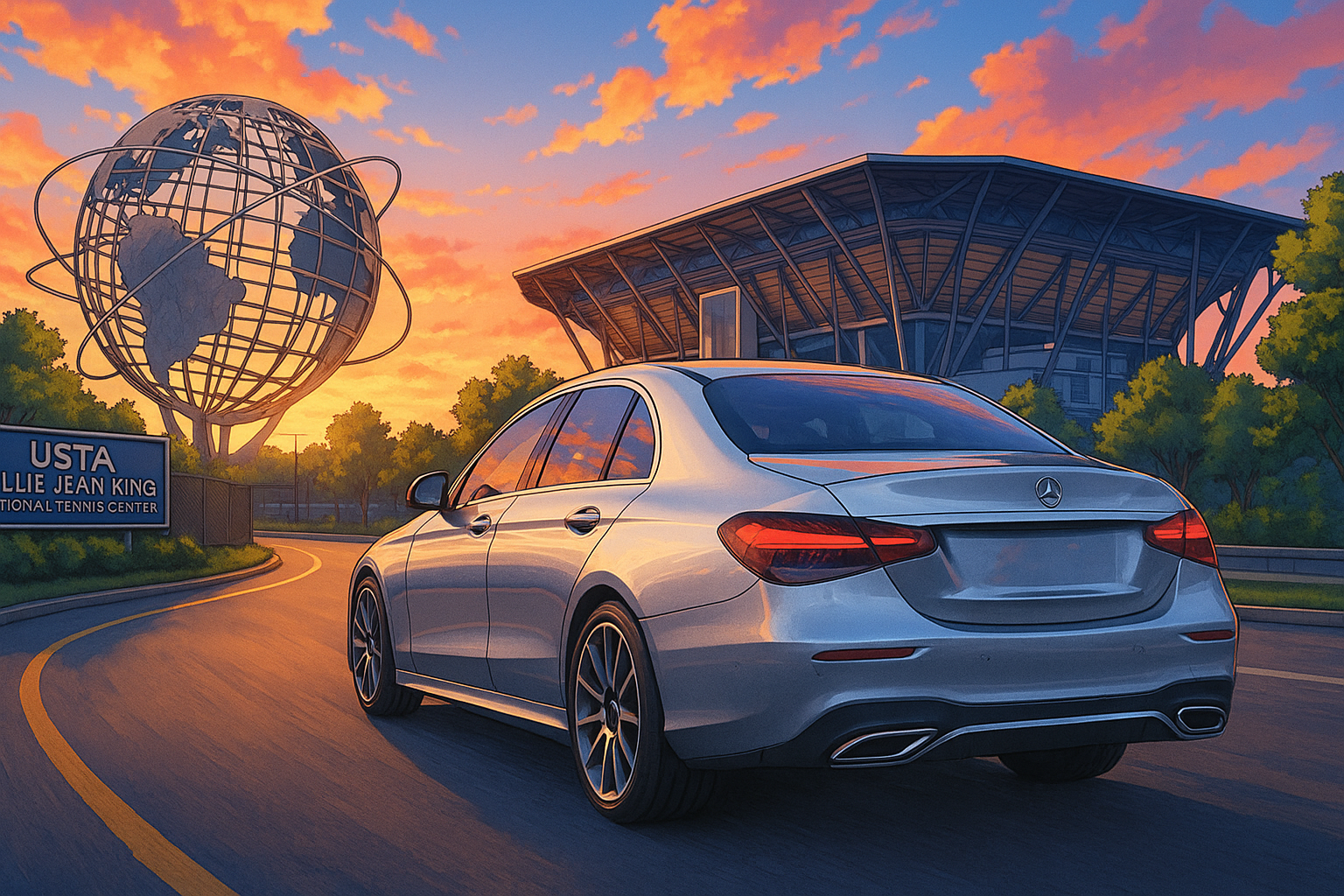
From January 1, 2026, Mercedes-Benz will become the Premier Partner and Exclusive Automobile Partner of the WTA, in a long-term agreement branded as the “WTA Tour Driven by Mercedes-Benz.” It will touch roughly 30 tournaments in its first season across WTA 1000, 500 and 250 level events, with plans to expand further from 2027.
This is the most significant commercial partnership in WTA history. And crucially, it signals a shift not just in sponsorship category — but in ambition.
Why This Deal Lands Differently
For the past several seasons, the WTA’s global partnership with Hologic was widely praised for its values-driven alignment, particularly around women’s health and purpose-led messaging. That deal mattered. It gave the tour stability at a critical moment and reinforced the WTA’s social credibility.
The Mercedes-Benz partnership does something different — and arguably more expansive.
Where Hologic spoke primarily to advocacy, Mercedes-Benz speaks to scale, luxury, and global consumer power. It is a brand with reach far beyond tennis, embedded in popular culture, elite sport and aspirational identity across continents. That matters for a tour whose athletes already dominate global recognition metrics but have often lagged in commercial amplification compared to their male counterparts.
This is not about replacing values with gloss. It’s about adding economic muscle to an ecosystem that is finally ready to absorb it.
A Natural Alignment of Standards
WTA Chair Valerie Camillo framed the partnership in terms of shared philosophy.
“Mercedes-Benz has long embraced the brand promise of ‘the best or nothing,’” she said. “It is significant that one of the world’s most iconic brands sees that same commitment to excellence in our athletes, our Tour and our vision for the future.”
The line resonated because it landed on familiar ground. The WTA was built on a refusal to accept “good enough.” Billie Jean King and the Original 9 demanded more — more respect, more prize money, more visibility — long before women’s sport was fashionable corporate territory.
Camillo acknowledged that lineage directly from the stage, opening her remarks by thanking King and Ilana Kloss.
“Your courage and conviction created the foundation that makes today possible,” she said. “It is a privilege to share the stage with you.”
The Commercial Context Has Changed
This deal arrives at a moment of undeniable momentum for women’s tennis.
Ten of the top 15 highest-paid female athletes in the world are WTA players. Coco Gauff — now also a Mercedes-Benz brand ambassador — sits at the top of that list. The WTA has rolled out a new brand identity, expanded global fan engagement, and awarded the largest prize money payout in the history of women’s sport at the 2025 WTA Finals in Riyadh.
Mercedes-Benz is not betting on potential anymore. It is buying into proof of concept.
Marina Storti, CEO of WTA Ventures, was clear-eyed about that shift.
“Securing such a strong and trusted partner is a pivotal moment,” she said. “Mercedes-Benz — synonymous with timeless elegance, innovation and uncompromising excellence — perfectly aligns with where we want the WTA to go.”
Unlike category-specific partners, Mercedes-Benz arrives as a lifestyle brand — one that can enhance tournament environments, player services and fan experiences simultaneously. From on-site vehicle fleets to premium activations, the partnership is designed to be visible, tactile and aspirational.
A Broader Platform Than Before
One of the quiet strengths of the Mercedes-Benz deal is that it does not confine women’s tennis to a single narrative.
Hologic’s partnership focused — rightly — on women’s health. But that framing, while important, can be limiting when it becomes the primary lens through which the sport is marketed.
Mercedes-Benz broadens the aperture.
This partnership positions WTA athletes not just as role models or advocates, but as global icons of excellence, competitive ferocity and cultural relevance. It invites luxury, design, innovation and performance into the same sentence as women’s tennis — without apology.
Mathias Geisen, Member of the Board of Management of Mercedes-Benz Group AG, put it simply.
“Tennis has always been close to our hearts,” he said. “It’s a sport defined by dedication, responsibility and self-confidence. This partnership reflects our commitment not only to the sport, but to the values it represents.”
History in the Room
The press conference repeatedly looped back to history — sometimes deliberately, sometimes by accident.
Geisen noted that Mercedes-Benz will celebrate its 140th anniversary next year. Billie Jean King jumped in from the audience with a grin.
“Karl Benz — 1886,” she said. “And then guess who Mercedes is? His daughter.”
The symmetry wasn’t lost on anyone. A brand born from legacy partnering with a tour born from rebellion — both now meeting in a mature, global marketplace.
Roger Federer, attending virtually, spoke directly to King about how her work shaped the sport he grew up in. He mentioned his wife Mirka’s years on tour, his daughters picking up rackets, and the sense that women’s tennis had always been part of his professional ecosystem.
“I felt good seeing the Mercedes star at tournaments,” he said. “It’s kind of our home away from home when you travel the world.”
Responsibility, Not Just Reach
King used her time to underline that visibility brings obligation.
“We need the players to understand what they have,” she said. “Supporting the sport, doing the interviews, showing up — it all helps the game grow.”
Mercedes-Benz echoed that sense of responsibility. Christina Schenck, Vice President Digital & Communications, spoke about storytelling and influence — about elevating personalities, not just events.
This is where the partnership could quietly outgrow its predecessor. With Mercedes-Benz’s media infrastructure and marketing sophistication, WTA players are positioned to reach audiences who may never have engaged through traditional tennis channels.
The Bigger Picture
What makes this deal feel consequential is not just its size, but its timing.
Women’s tennis no longer needs validation. It needs acceleration.
The Hologic partnership helped perhaps steady the tour. The Mercedes-Benz partnership is designed to expand it — commercially, culturally and globally. It acknowledges that the WTA is no longer a cause to support, but a product to invest in.
As Germany’s Andrea Petkovic closed the event — fittingly, with a line both light and precise — she summed it up better than any press release could.
“A beautiful partnership,” she said. “A new journey on the path of women’s tennis.”
This one feels built for distance.
Related WTA Articles You Might Enjoy
Why Mercedes-Benz Signed Coco Gauff: Strategic Pivot Behind a Power Partnership
Paula Badosa Chooses the Paycheck Over Principle with Saudi Arabia PIF Deal